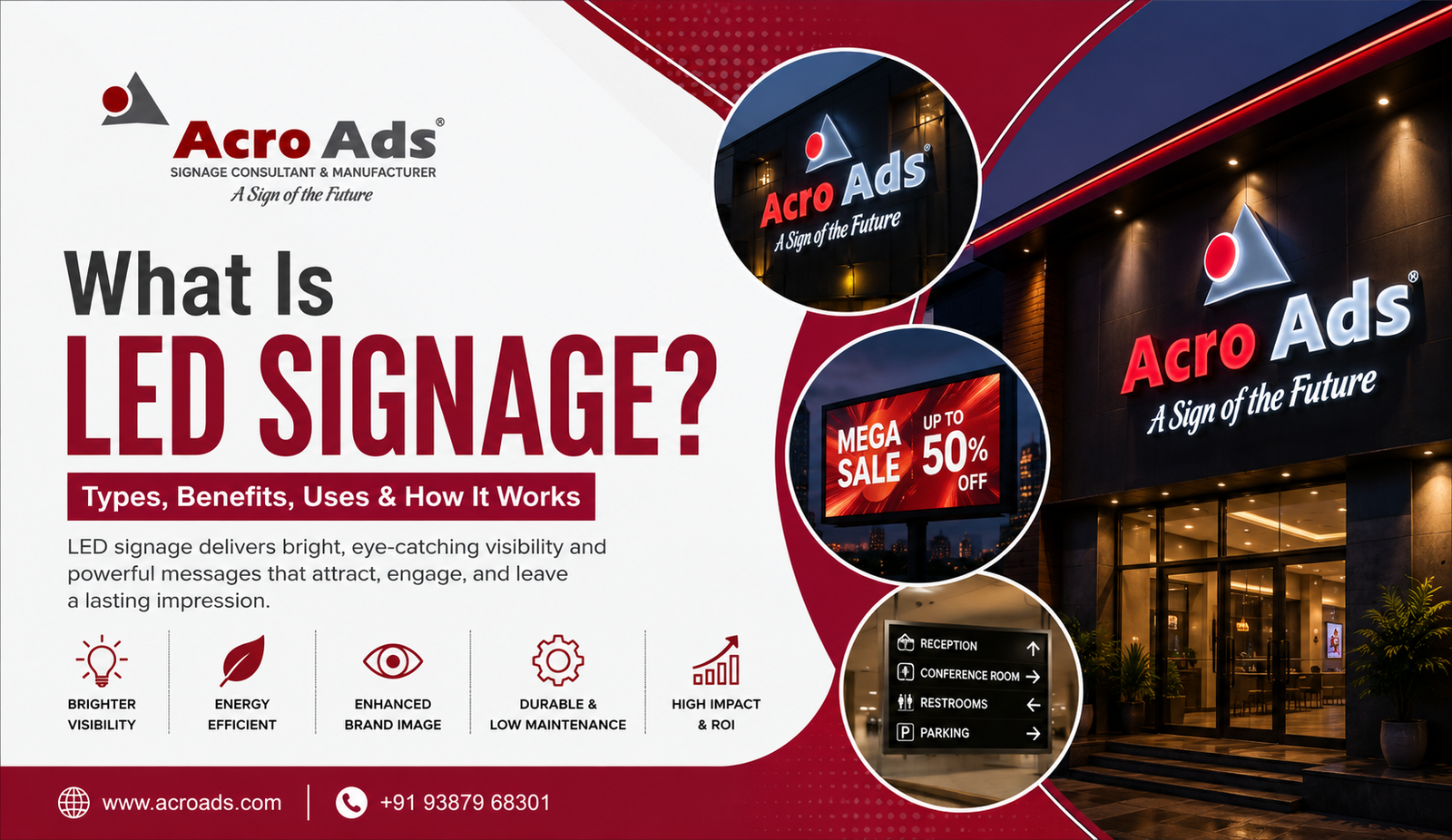
LED signage has become an important part of modern business advertising and visual communication. From illuminated shop names and company logos to large digital advertising screens, LED signs help businesses communicate with customers clearly and attract attention during the day and at night.
LED stands for Light-Emitting Diode. LEDs produce bright light while using electricity efficiently, which makes them suitable for many types of illuminated signage. LED technology can be used in static signs such as channel letters as well as electronic displays that show changing text, images or videos.
The International Sign Association describes channel letters as three-dimensional letters that may contain a light source. It also defines electronic message centres as signs capable of displaying computer-generated or electronically changing messages.
Today, LED signage is widely used by retail stores, offices, hospitals, hotels, restaurants, shopping centres, factories and many other commercial establishments.
What Is LED Signage?
LED signage is a type of sign that uses Light-Emitting Diodes (LEDs) as a source of illumination or as part of a digital display.
In illuminated business signage, LEDs are commonly installed inside letters, logos or sign boxes. The light helps make the business name and branding more visible, especially at night.
LED signage can also refer to digital LED screens. These displays contain many small LED elements or modules that work together to create text, graphics, images, animations and videos.
Therefore, LED signage can include:
- LED channel letters
- Front-lit letters
- Backlit or halo-lit letters
- Illuminated logos
- LED sign boards
- Electronic message boards
- Indoor LED displays
- Outdoor LED displays
Businesses can choose the type depending on their branding, location, viewing distance and communication requirements.
How Does LED Signage Work?
The working principle of LED signage depends on the type of sign.
In an illuminated letter sign, small LED modules are installed inside or behind fabricated letters. Electrical power is supplied through drivers or power supplies. When switched on, the LEDs illuminate the face, back or edges of the letters.
For example, a front-lit channel letter normally uses LEDs inside the letter body to illuminate a translucent front face. A backlit sign directs the light towards the wall behind the letters, creating a halo effect.
The International Sign Association defines backlighted letters as channel letters where light is directed against the surface behind the letter to produce the halo effect.
Digital LED signage works differently. Thousands of LED pixels can be controlled electronically. A media player or content management system sends information to the screen, allowing businesses to display and change advertisements, announcements, prices, images and videos.
Different Types of LED Signage

There are several types of LED signage available for commercial applications.
Front-Lit LED Signage
Front-lit signs illuminate the front face of letters. They are commonly used for storefronts, showrooms and building façades.
Backlit or Halo-Lit Signage
LEDs illuminate the wall behind each letter, producing a glowing halo. This type of signage gives corporate offices, hotels and premium retail stores an elegant appearance.
LED Channel Letters
Channel letters are individually fabricated three-dimensional letters. They can be front-lit, backlit or designed using a combination of lighting effects.
LED Logo Signage
Company logos can also be fabricated with internal LED lighting to maintain consistent brand visibility.
Digital LED Displays
Digital LED screens can display changing text, photographs, graphics, advertisements and videos. The International Sign Association classifies dynamic digital signage as screens displaying messages, images or a series of images.
Main Components of LED Signage
An LED signage system contains several components that work together.
The exact components depend on whether the sign is a static illuminated sign or a digital display.
Common components include LED modules, power supplies, wiring, fabricated letters, sign faces, mounting structures and electrical connections.
LED channel letters are commonly manufactured using materials such as aluminium, acrylic and other weather-resistant materials. LEDs are installed inside the fabricated structure to provide illumination.
Digital LED signage contains additional components such as LED modules or panels, control systems, processors, media players and content management software.
The quality of these components directly affects brightness, appearance, reliability and maintenance requirements. Using good-quality electrical components and professional installation is therefore important for long-term performance.
Benefits of LED Signage for Businesses
One of the main benefits of LED signage is improved visibility.
A properly illuminated sign can help customers identify a business during both daytime and nighttime hours. It can also strengthen a company’s visual identity by displaying its logo, colours and name prominently.
The International Sign Association notes that illuminated signs can enhance a store’s image, identify the business location and reinforce branding and advertising.
LED signage can also offer:
- Bright and clear illumination
- Better nighttime visibility
- Modern appearance
- Custom design possibilities
- Energy-efficient operation
- Long-term reliability
- Stronger brand recognition
- Improved storefront appearance
Digital LED signs provide another important benefit: the content can be changed without replacing the physical sign. Businesses can display different promotions, announcements or information according to their requirements.
Indoor vs Outdoor LED Signage

LED signage can be designed for both indoor and outdoor environments.
Indoor LED signage is commonly installed in shopping malls, reception areas, retail stores, airports, hospitals, restaurants and corporate offices. It can be used for branding, advertising, information and directional communication.
Outdoor LED signage is designed to remain visible in brighter environments and withstand external conditions. It is commonly installed on building façades, retail storefronts, commercial complexes and other outdoor locations.
Outdoor signs normally require suitable weather protection, strong mounting systems and appropriate brightness.
Samsung notes that digital signage can be used both outdoors and inside businesses to attract attention, communicate promotions and guide customers towards relevant products or services.
The right option depends on installation location, environmental conditions and expected viewing distance.
Common Applications of LED Signage
LED signage is used across many industries because businesses need visible and effective communication.
Retail stores use LED signage for storefront names, promotional messages and branding.
Restaurants and cafés use illuminated signs, menu boards and digital displays.
Hospitals and healthcare facilities use LED signage for building identification, directional signs and important information.
Hotels use illuminated letters and logos to improve visibility and create a premium appearance.
Corporate offices use LED signs in reception areas, façades and office buildings to strengthen brand identity.
Other common applications include:
- Shopping malls
- Banks
- Educational institutions
- Airports
- Showrooms
- Factories
- Entertainment venues
- Commercial complexes
Electronic displays are particularly useful when information needs to be updated regularly.
LED Signage vs Traditional Signage
Traditional non-illuminated signage usually uses printed graphics, painted surfaces, metal letters or other static materials.
LED signage adds illumination or digital capabilities.
The biggest difference is visibility. An illuminated LED sign remains clearly noticeable after daylight decreases, while a traditional non-illuminated sign depends heavily on surrounding light.
Digital LED signage provides another advantage because the displayed content can be changed electronically.
Samsung explains that traditional static signage generally displays one fixed message, whereas digital signage allows businesses to communicate changing announcements, promotions and other information.
However, the best choice depends on budget, business requirements, location and branding goals.
How to Choose the Right LED Signage
Choosing LED signage should begin with understanding its purpose.
A retail business may want highly visible storefront letters, while a corporate office may prefer subtle halo-lit signage. A shopping centre may require a large digital LED display for advertising.
Important factors include:
- Sign location
- Indoor or outdoor installation
- Viewing distance
- Available installation space
- Brand colours
- Letter size
- Desired lighting effect
- Brightness requirements
- Maintenance requirements
- Local signage regulations
- Available budget
For digital signage, businesses should also consider the content they want to display and how frequently it will change.
Samsung recommends considering where customers spend time, what information needs to be communicated and which display format is most suitable for that location.
LED Signage Cost, Installation and Maintenance
The cost of LED signage varies significantly from one project to another.
Factors affecting the price include sign dimensions, materials, lighting method, number of letters, design complexity, installation height, supporting structure and electrical requirements.
Digital LED display prices can also depend on screen dimensions, pixel pitch, resolution, brightness and control technology.
Professional installation is important because LED signs require proper electrical connections, mounting and positioning.
Maintenance may include cleaning the sign surface, checking electrical connections, replacing damaged LED modules and inspecting power supplies.
Energy efficiency should also be considered. The U.S. Department of Energy notes that LED lighting technology can reduce energy costs and generally provides longer operating life than many older lighting technologies.
For digital signage displays, power-management settings can also help reduce unnecessary energy consumption.